
Why Every Michigan Boat Owner Should Consider Marine Protection Film
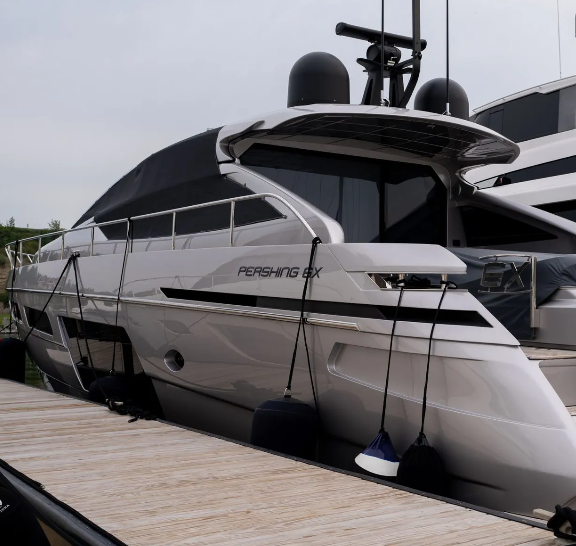
Owning a boat in Michigan means loving the water and also accepting challenges most boaters do not think about until the damage is visible. Between long hours of summer sun, wind driven debris, dock contact, and months of winter storage, your boat’s gelcoat takes a beating slowly enough to go unnoticed. That is why more Michigan boat owners are turning to marine protection film, a clear and durable layer that guards against scratches, oxidation, and staining before they become permanent.
Michigan boat owners should consider marine protection film because it provides a durable barrier against the environmental damage common on the Great Lakes and inland waters, including UV exposure, oxidation, water staining, and impacts from debris or dock contact. Professionally installed marine protection film helps preserve a boat’s gelcoat finish, maintain resale value, and reduce long term maintenance by preventing scratches, chips, and fading.
Why Michigan Boats Face a Unique Set of Challenges
Michigan boat owners deal with conditions that make surface protection more than a cosmetic upgrade. Our boating season is short and intense, and for the rest of the year the vessel sits in storage, on a trailer, or under shrink wrap. That cycle of heavy summer use followed by freeze and thaw is hard on gelcoat.
Consider what a single season involves. Spring launch brings sand, silt, and debris stirred up by runoff. Summer delivers long hours of direct sun magnified by reflection off the water. Fall haul out means trailering on salted or graveled roads, plus handling, strapping, and covering. Every one of those steps is an opportunity for a scratch, a scuff, or a slow loss of gloss.
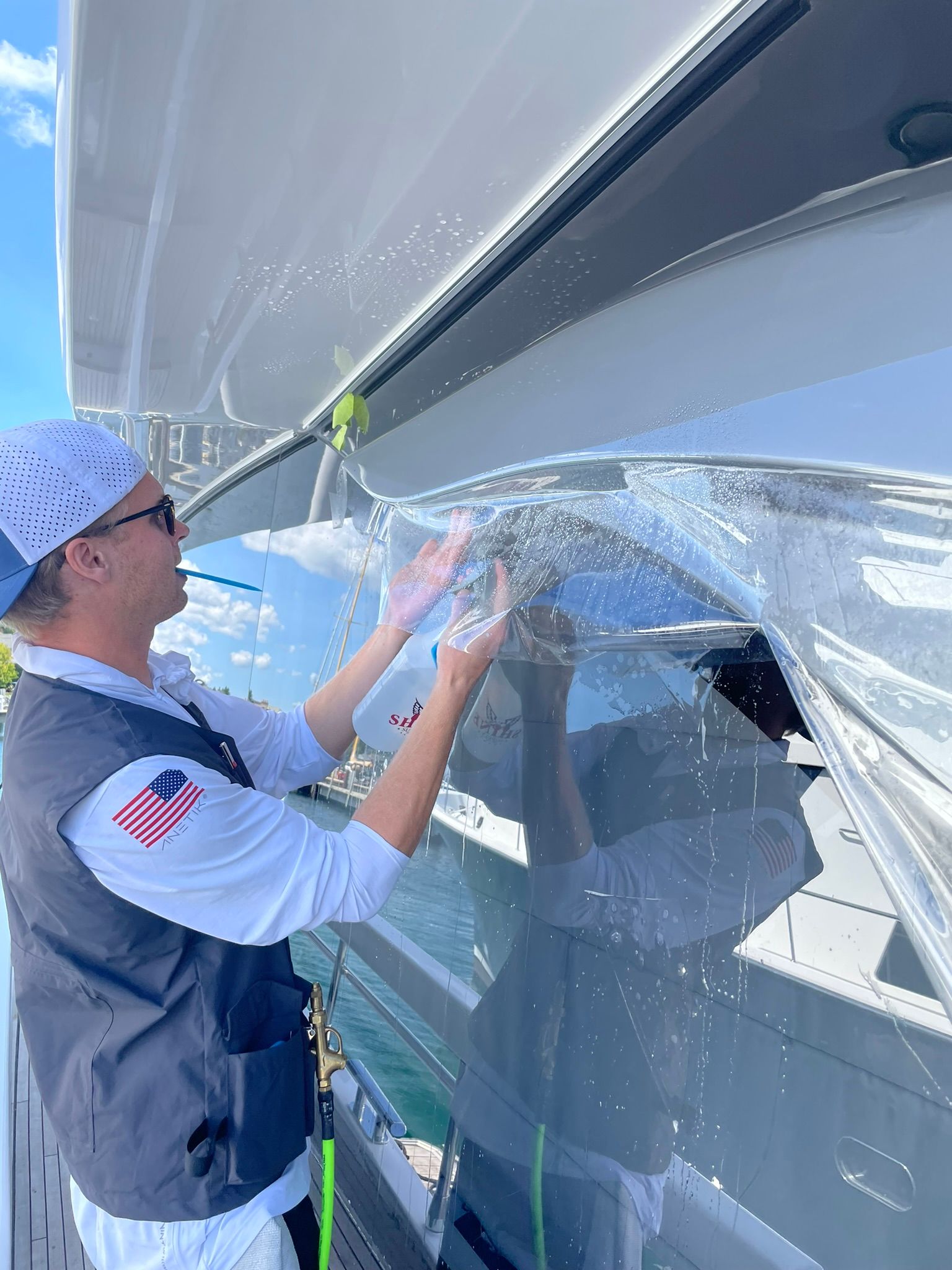
Marine protection film addresses the problem at the surface, absorbing contact and blocking UV before either reaches the finish underneath. At The Detail Collective, we install Yacht Armor, the world’s first and most advanced marine protection film, on boats throughout West Michigan and Northern Michigan.
What Marine Protection Film Does for Freshwater Boaters
Freshwater boating carries a different set of problems than saltwater. Corrosion from sea salt is not the main threat on the Great Lakes. Oxidation, biological fouling, and UV breakdown are.
Unprotected gelcoat oxidizes. The surface chalks, loses depth, and eventually needs compounding or full restoration to look right again. Yacht Armor is the only marine protection film built specifically to prevent that oxidation, which is why we recommend it over a coating alone for owners who want the finish to hold.
Freshwater also promotes organic growth and mineral staining along the waterline and on hull sides. A film surface gives that buildup far less to grip, so routine washing removes it instead of aggressive scrubbing. That matters, because repeated hard cleaning is itself a leading cause of gelcoat wear.
Then there is the sun. Michigan summers put boats under intense, reflected light for hours at a time. Yacht Armor delivers exceptionally high UV rejection, which protects color and gloss rather than simply slowing the fade.
Beyond the surface protection itself, the change owners notice fastest is how much less work the boat requires. With Yacht Armor applied, the constant cycle of waxing and polishing goes away. You wash the boat, and you are done.
Protection Against Sun, Weather, and Water
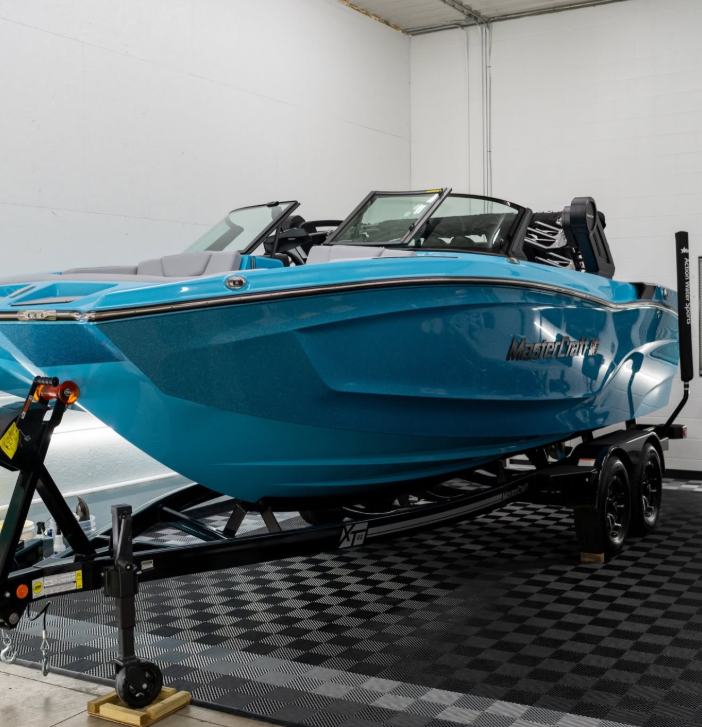
Michigan weather does not stay still. A bright morning can turn into wind and rain by afternoon, and the boat is exposed to all of it. Yacht Armor is tested to withstand extreme UV exposure, temperature swings, and humidity without peeling or bubbling.
Sun damage deserves particular attention because it is cumulative and difficult to reverse. UV exposure breaks down the polymer structure in gelcoat, producing chalking, the powdery residue and rough texture that dulls a finish. Once gelcoat reaches that point, the fix is restoration rather than cleaning. Film prevents the damage instead of correcting it later.
Storm debris is the other factor. Branches and grit carried by sudden gusts can scratch a hull or hardtop in seconds. No film makes a boat invincible, but a sacrificial layer means the film takes the mark instead of the gelcoat.
Guarding Against Scratches and Dock Rash
Every boat owner knows the feeling. The boat is finally spotless, and then something scrapes it. A tight slip, a piling, a fender that shifted, a careless moment loading gear. Gelcoat is durable, but these small blemishes accumulate over the years.
This is where marine protection film earns its place. Acting as a nearly invisible sacrificial barrier, it absorbs scratches and minor impacts before they ever reach the surface beneath. Wax and ceramic coatings protect against environmental contact but not physical damage. Film does both.
Yacht Armor also has a self healing surface, so many light defects disappear with exposure to heat or sunlight. That keeps the boat looking sharp through a full season of normal use.
Coverage can be tailored to your vessel. Yacht Armor can be applied to nearly any smooth surface above the waterline, gelcoat or painted, including hull sides, outboard motors, hatches, railings, high contact areas, and onboard screens and displays. It is available in gloss, matte, black, and a wide range of color change options, with two thickness choices for gloss and matte so each area gets the appropriate level of protection.
Extending Lifespan and Protecting Resale Value
Protecting a boat’s finish is a practical decision, not just a matter of pride. Buyers judge a used boat largely on how the gelcoat looks, and oxidation or a dull, scratched hull affects what the vessel brings at sale. A boat protected from day one shows it.
Washing and waxing remain useful, but they cannot substitute for a physical barrier. By reducing the accumulation of small damage, you slow the process that eventually leads to expensive restoration work.
Is Marine Protection Film Worth the Investment?
Marine protection film is a real investment, and the honest way to evaluate it is against what you would otherwise spend over the same period.
Yacht Armor is designed to last five to seven years on average, even under constant sun and demanding conditions. Across that span, consider what you are not paying for: annual waxing and polishing, periodic compounding to correct oxidation, and eventually gelcoat restoration if the surface is allowed to degrade. Add the time you personally spend on upkeep, and the calculation shifts further.
There is also flexibility on the back end. Yacht Armor can be removed safely without harming gelcoat or paint, and it leaves no adhesive residue, so you keep your options open for refinishing or a change of look later.
Pricing depends on your boat’s size and how much coverage you want, which is why we quote every project individually rather than publishing a flat rate.
Protect Your Boat Before the Damage Starts
The best time to apply marine protection film is before the finish shows wear, ideally on a new boat or immediately after gelcoat restoration. If your boat is already showing oxidation or scratches, we can correct the surface first and then protect it.
The Detail Collective is Michigan’s leading Yacht Armor installer, with over 15 years of experience in automotive and marine work. We handle installations at our Grand Rapids shop, and our mobile marine team brings the same standard of work directly to your dock or marina, including seasonal service in Northern Michigan for owners in Petoskey, Harbor Springs, Bay Harbor, and Charlevoix.
Call The Detail Collective at
(231) 838-0398 or
schedule your consultation at thedetailcollective.com, and we will walk you through the right coverage plan for your boat and the way you use it.


Frequently Asked Questions
How long does Yacht Armor marine protection film last?
On average, Yacht Armor lasts five to seven years, even with constant sun exposure and demanding conditions. That durability comes from marine grade materials and advanced adhesive technology. With proper care, you get years of protection without peeling, fading, or discoloration.
What parts of my boat can be covered?
Yacht Armor can be applied to nearly any surface above the waterline, including hull sides, outboard motors, hatches, railings, digital displays, and high contact areas. We build a coverage plan around your specific boat, whether the priority is preserving the finish, cutting maintenance time, or defending against dock rash.
Can the film be removed later without damaging my gelcoat?
Yes. Yacht Armor is engineered to come off safely without harming gelcoat or painted surfaces, and it leaves no adhesive residue behind. That makes it straightforward to replace the film or refinish the boat down the road.
How do I take care of the film after installation?
Maintenance is simple and does not require expensive products. Use a gentle detailing solution with a soft microfiber cloth or sponge, and avoid abrasive brushes and harsh chemicals. Many light defects will self heal with exposure to heat or sunlight.
How is marine protection film different from a ceramic coating?
Ceramic coatings add hydrophobic properties and make cleaning easier, but they do not stop physical defects or oxidation. Yacht Armor provides a physically durable barrier against debris and impact, resists oxidation, and self heals. For surfaces where film cannot be applied, a marine ceramic coating is the right complement, and we install both.
Will the film change how my boat looks?
Properly installed, it is virtually invisible. Yacht Armor is available in clear gloss, matte, black, and a full range of color change options, so it either preserves your boat’s current appearance or intentionally changes it.
Do you come to my boat, or does it have to come to you?
Our mobile unit is dedicated to marine work, so we can perform installations at your dock or marina throughout the Grand Rapids area, with seasonal mobile service available in Northern Michigan.