
Should You Get PPF Before Ceramic Coating or After?
If you plan to use both paint protection film and ceramic coating on your vehicle, PPF should generally be installed first, followed by ceramic coating. Paint protection film creates a physical barrier over vulnerable painted surfaces, while ceramic coating can then be applied to compatible surfaces to improve water behavior, gloss, and ease of maintenance. Installing them in this order allows each protection option to serve its intended purpose without creating unnecessary complications during PPF installation.
For vehicle owners in Grand Rapids and surrounding Michigan communities, the bigger question is not simply which product comes first. It is how much protection your vehicle needs, where PPF should be installed, whether ceramic coating makes sense for the remaining surfaces, and how the entire system should be prepared and installed.
What Is the Difference Between PPF and Ceramic Coating?
Paint protection film and ceramic coating are often discussed together, but they perform different jobs.
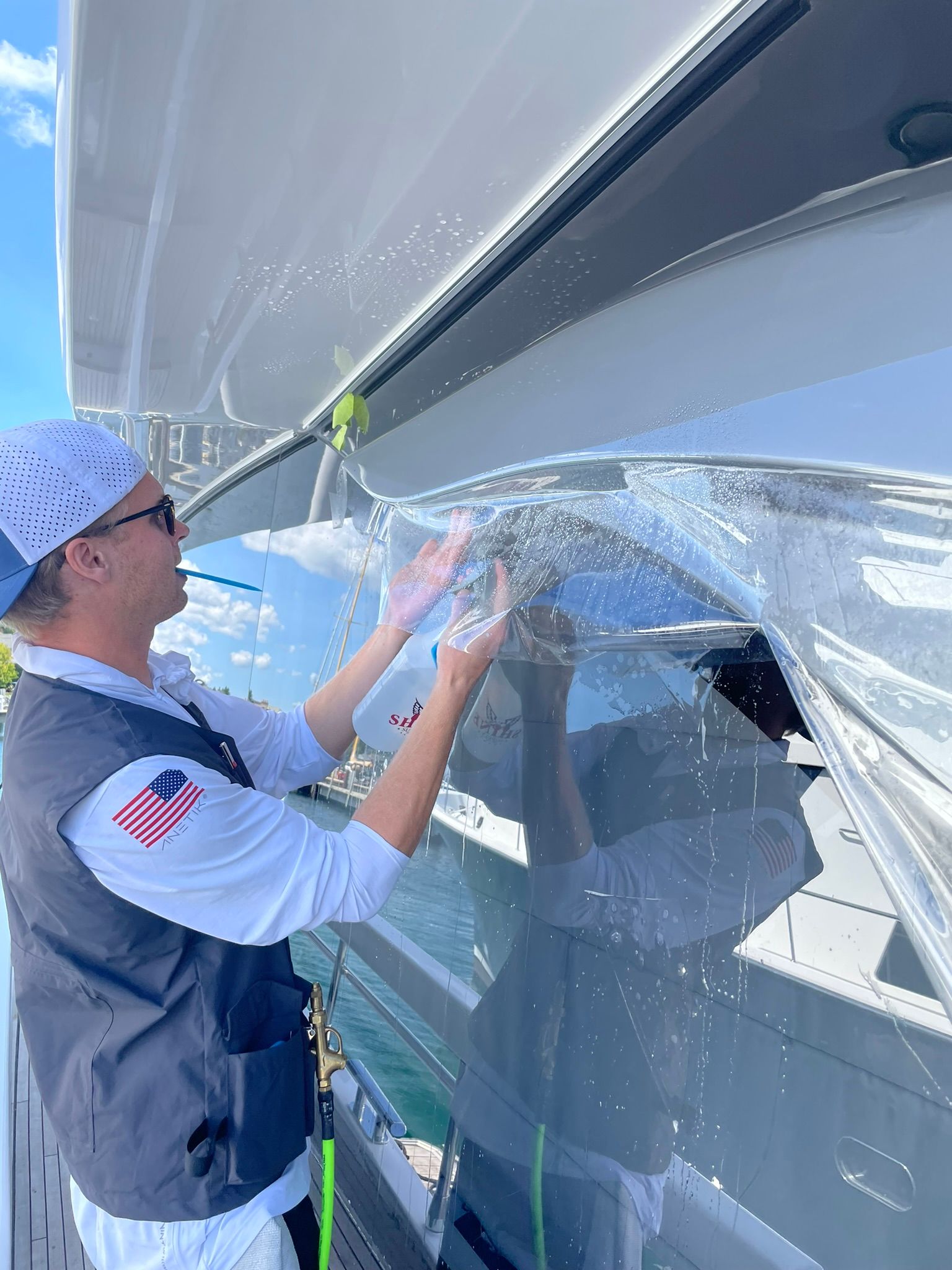
Paint protection film, or PPF, is a transparent urethane based film installed over painted surfaces. Its primary role is to provide a physical barrier between the paint and common road hazards such as rock chips, road debris, bug residue, and minor surface contact. Modern PPF can also have self healing surface properties that allow light marks in the film to become less noticeable with heat.
The Detail Collective offers customizable PPF coverage ranging from front end protection to full body applications, along with gloss, matte, satin, and colored options.
Ceramic coating is a liquid applied surface treatment. Once properly prepared and cured, it creates a hydrophobic surface that helps water, dirt, and contaminants release more easily during regular vehicle maintenance. It can also enhance gloss and paint clarity.
Ceramic coating is not a substitute for the physical barrier provided by PPF. Likewise, PPF does not eliminate the maintenance benefits that a ceramic coating can provide.
Why Should PPF Usually Be Installed Before Ceramic Coating?
PPF needs a properly cleaned and prepared surface so the film can be positioned and installed correctly.
Installing ceramic coating before PPF can add an unnecessary preparation step because the installer may need to assess or remove the coating from areas where film will be installed. For that reason, if you already know that you want both services, planning the PPF installation first generally creates the more logical workflow.
Once the film is installed and ready for the next stage of service, a compatible ceramic coating can be applied according to the products and installation process being used.
The result is a layered approach in which PPF addresses physical road exposure while ceramic coating focuses more on surface behavior, gloss, and routine maintenance.
What Does PPF Protect Against?
PPF is especially useful on areas that experience frequent road exposure. Depending on the vehicle and how it is driven, those areas may include the:
- Front bumper
- Hood
- Front fenders
- Side mirrors
- Rocker panels
- Headlights
- Other high impact painted surfaces
Full body PPF can also be considered when the owner wants broader protection across the vehicle.
The Detail Collective currently offers several customizable coverage options, including front end, full front end, track, and full body PPF packages. Some listed packages include a 10 year manufacturer warranty.
This flexibility matters because the best protection plan for a daily driven SUV may look very different from one designed for a performance vehicle, luxury car, weekend vehicle, or collector car.
What Does Ceramic Coating Add After PPF?
Ceramic coating complements PPF rather than replacing it.
Its hydrophobic characteristics can help water and certain contaminants release more readily from treated surfaces. That can simplify routine washing and help owners maintain the appearance of a professionally protected vehicle.
Ceramic coatings can also enhance gloss and visual depth on treated surfaces. This is particularly relevant for owners who care about keeping a premium vehicle looking carefully maintained rather than simply adding another layer of protection for the sake of it.
The Detail Collective currently offers multiple Gtechniq ceramic coating options, including shorter term and longer term packages, with paint correction included as part of the listed automotive coating packages.
The important point is to choose the coating based on the vehicle, the surfaces being treated, maintenance expectations, and the protection plan as a whole.
Do You Need Both PPF and Ceramic Coating?
Not every vehicle owner needs both.
PPF may be the higher priority if your main concern is protecting painted surfaces that regularly encounter road debris and other physical hazards.
Ceramic coating may make sense on its own if your primary goals are enhanced gloss, hydrophobic behavior, and easier ongoing vehicle care.
Using both can make sense when you want physical protection on vulnerable areas and easier maintenance across treated surfaces.
Instead of assuming that maximum coverage is automatically the right answer, consider how you actually use the vehicle. A professional installer should be able to discuss your driving habits, vehicle type, ownership plans, preferred appearance, and maintenance expectations before recommending coverage.
What If Your Vehicle Already Has Ceramic Coating?
Having an existing ceramic coating does not necessarily mean you cannot add PPF later.
It does mean that you should tell your installer about the coating before the PPF appointment.
The installer needs to evaluate the condition of the paint and determine what preparation is required on the areas that will receive film. The goal is to create an appropriate surface for the PPF installation rather than simply applying film over an unknown or incompatible existing surface treatment.
Avoid attempting to hide an existing coating or assuming it will make no difference. Proper evaluation before installation gives the technician a better opportunity to plan the service correctly.
Why Surface Preparation Matters Before Either Service
Premium protection begins with the condition of the surface underneath it.
Before PPF or ceramic coating is installed, the vehicle must be thoroughly cleaned and inspected. Depending on its condition, paint correction may also be appropriate.
This step matters because protection products do not automatically correct existing defects. Applying film or coating over poorly prepared paint can leave imperfections visible beneath the finished protection.
At The Detail Collective, paint correction is incorporated into its listed ceramic coating packages, while its PPF process emphasizes careful preparation and custom fitting.
For an owner investing in the long term condition of a luxury, performance, or carefully maintained vehicle, the preparation process deserves just as much attention as the product itself.
Why Professional PPF and Ceramic Coating Installation Matters
PPF installation requires precision around curves, panel edges, body lines, trim, and complex vehicle shapes. Ceramic coating also depends on careful surface preparation, controlled application, and appropriate curing.
The Detail Collective’s ICP specifically identifies workmanship, attention to detail, seamless coverage, communication, and personal service as major decision factors for its ideal customers.
That makes installation quality particularly important.
The Detail Collective has more than 15 years of experience and provides automotive PPF, ceramic coatings, paint correction, and detailing from its Grand Rapids location. Its approach is positioned around careful craftsmanship and personalized vehicle protection rather than high volume, rushed work.
For premium vehicles, the difference between simply purchasing a protection product and choosing an experienced installer can be significant.
How Should You Decide Which PPF Coverage You Need?
Start with your actual driving conditions.
If your vehicle spends significant time on highways, the front bumper, hood, fenders, and mirrors may receive more exposure to road debris. A front focused PPF package may therefore align with your priorities.
Owners of performance cars, exotics, luxury vehicles, or vehicles they plan to preserve carefully may prefer broader coverage.
Full body PPF can provide a more comprehensive approach by covering painted panels throughout the vehicle.
The goal should not be to purchase the largest package automatically. It should be to match the coverage with the way the vehicle is driven, maintained, and valued.
How Do You Maintain PPF and Ceramic Coating?
PPF and ceramic coating still require routine care.
Use proper washing techniques, suitable vehicle care products, and avoid aggressive cleaning methods that could unnecessarily affect protected surfaces.
Contaminants such as bird droppings, bug residue, and road grime should be addressed rather than left on the surface for extended periods.
The Detail Collective recommends gentle hand washing with appropriate detailing products or professional maintenance for PPF.
Your installer can also explain any product specific care recommendations following installation.
Protect Your Vehicle With the Right PPF and Ceramic Coating Plan
When both services are part of your protection strategy, installing PPF first and ceramic coating afterward is generally the most practical sequence. PPF provides the physical barrier, while ceramic coating can complement that protection with hydrophobic properties, enhanced appearance, and easier maintenance.
More importantly, the protection plan should be built around your specific vehicle rather than a generic package.
The Detail Collective works with vehicle owners in Grand Rapids and surrounding Michigan communities to create customized protection plans using professional paint protection film and ceramic coating services.
Speak with The Detail Collective about your vehicle, driving habits, preferred coverage, and maintenance goals to determine the combination that makes sense for you. Request a free quote or call (231) 838-0398 to discuss your options directly.
Frequently Asked Questions
Should PPF go on before ceramic coating?
Yes. When both services are being installed as part of the same protection plan, PPF is generally installed first. Ceramic coating can then be applied to appropriate surfaces after the PPF installation process is complete.
Can ceramic coating be applied over PPF?
Yes, compatible ceramic coatings can be applied over paint protection film. This can add hydrophobic characteristics and make the protected surface easier to maintain. Your installer should confirm compatibility between the specific film and coating being used.
Can ceramic coating replace PPF?
No. Ceramic coating and PPF perform different functions. Ceramic coating primarily supports gloss, hydrophobic behavior, and easier maintenance, while PPF creates a physical barrier against hazards such as road debris and rock chips.
Can I install PPF if my car is already ceramic coated?
In many cases, yes. Tell your installer about the existing coating before the appointment. The areas receiving PPF may require additional evaluation and surface preparation before installation.
Do I need ceramic coating if my vehicle already has PPF?
Not necessarily. PPF can be used without ceramic coating. Some owners add ceramic coating because they want additional hydrophobic properties, gloss, or easier routine maintenance.
Should the whole vehicle receive PPF?
That depends on your driving habits, vehicle type, budget, ownership goals, and desired level of coverage. Some owners protect high impact areas, while others choose full body PPF for broader coverage.
Does PPF require paint correction first?
Not every vehicle requires the same level of correction. The paint should be inspected and properly prepared before film installation. Existing defects may remain visible underneath transparent PPF, so correction may be recommended when appropriate.
How long does PPF last?
Longevity depends on the film, installation, environmental exposure, driving conditions, and maintenance. The Detail Collective currently lists a 10 year manufacturer warranty with several of its PPF packages.